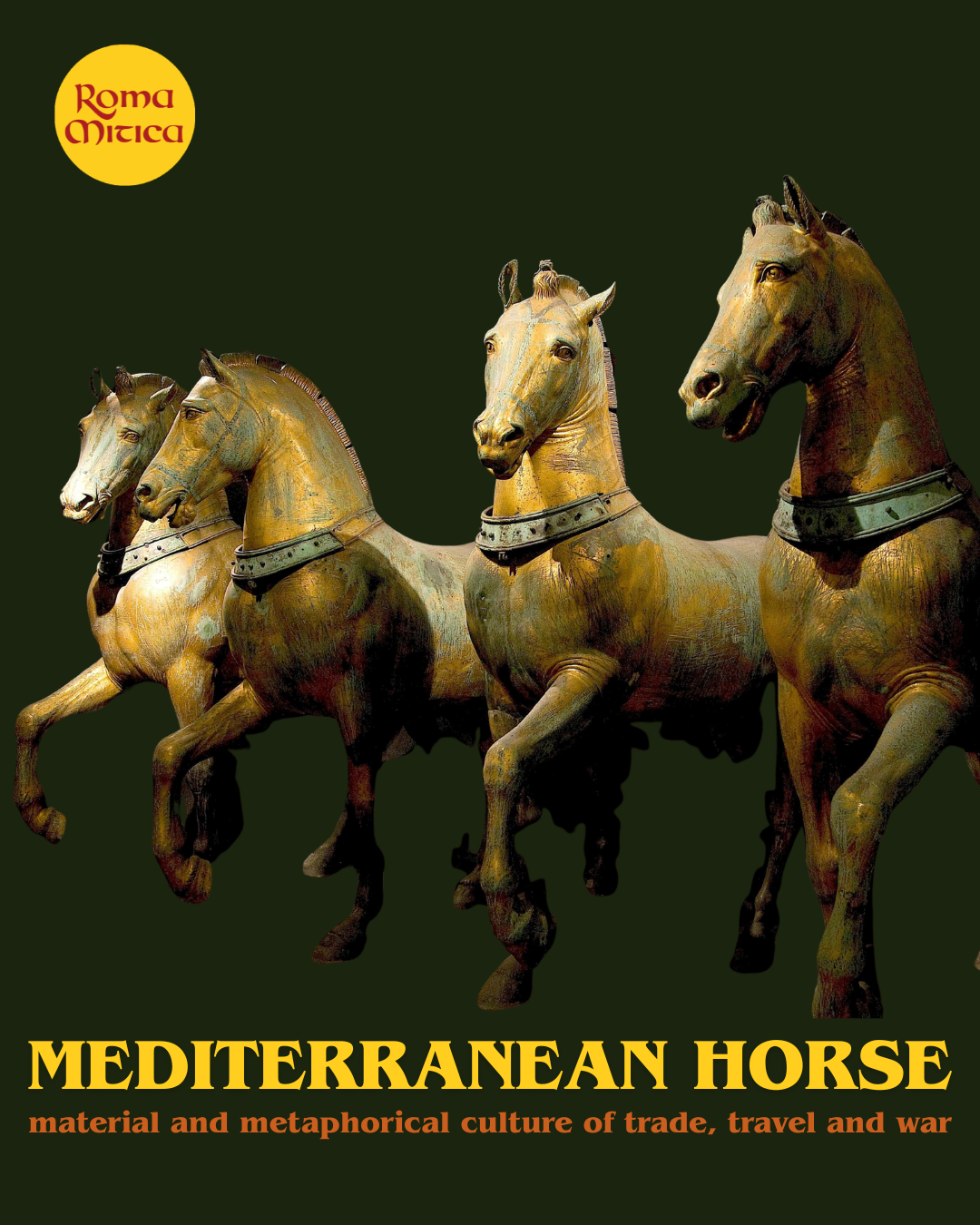
ROMA MITICA invites artists to contribute original artworks for an upcoming limited edition art book exploring the material and metaphorical culture of the Mediterranean horse.
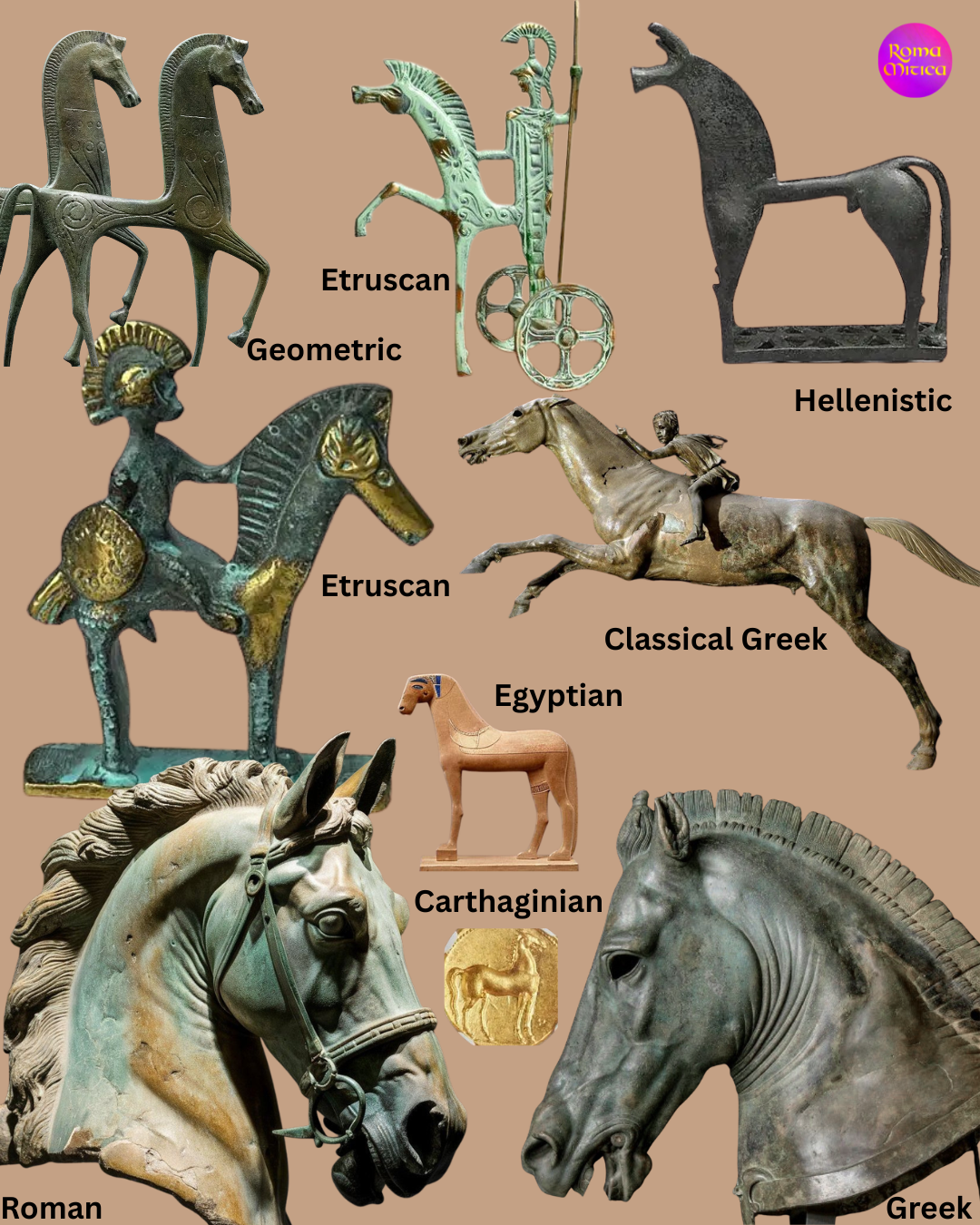
Mediterranean history is marked by equine ecology. From the cursed gift horse of Troy, to the quadriga stolen by the Venetians from Constantinople, from the warrior Amazon horsewomen from the Black Sea, to the Greek charioteers of the Parthenon, from the Pharaoh's gilded carriage, to Rome's annual October horse sacrifice - the ancient world was centred on the horse, celebrated in the religious cult of Castor and Pollux, protectors of legionary soldiers and the pretorian guard.
No one can take the beauty of the horse or the mutual bond with man for granted when considering the horse. Artists have tried to represent this in various ways, memorialising horses alongside gods and heroes and imagining a mounted rider as a hybrid creature of the centaur.
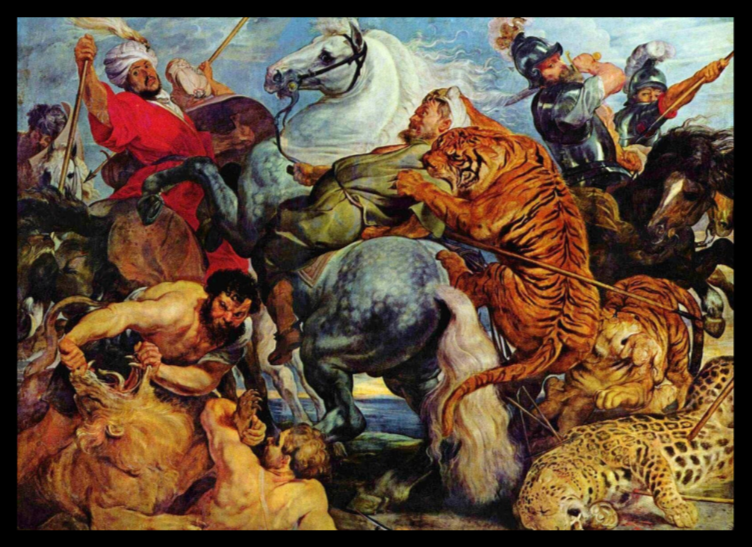
But so too, no one can deny the horse's role in warfare and conquest through the millennia. No empire could be created without horsemanship skills and breeding programs - Bucephalus was so key to the success of Alexander the Great’s he founded a city in his horse’s name; Asturcus, Julius Caesar’s horse, said to have human feet, so that he could only be mounted by the dictator; and everyone knows that Caligula so loved his horse Incitatus, that the popular joke that he intended to make him a Senator is still believed. The fame of the horses of great generals and warlords is such that their horses names have come down to us through history: from Charlemagne’s Tencendur to Napoleon’s Morengo and his nemesis Wellington’s Copenhagen. Let us consider why Ghengis Khan was able to seep through Europe thanks to the hardy Mongolian ponies, bred for endurance, as were the horses of Rome, Mauretania, Persia and China, all of whom practiced some form of horse worship and hippomancy (divination by horse). There was a time when a horse could make or break an Empire or confer Kingship. No wonder then at the horses’ importance. Owning a horse and possessing the skills of horsemanship in the Middle Ages were the basis of the establishment of the knightly class.
Horses were once a means that allowed, not only conquest, but also communication and cultural exchange. The horse would have been a tank, a telephone and a train, all at the same time. So it is timely to consider the horse because we find ourselves before a technological leap so large that makes the domestication of the horse seem no great thing. It is said that man has made four leaps in civilisation: the invention wheel, the taming of the horse, the innovation of the printing press, & now, the creation of A.I, artificial intelligence. So in this light the horse can be seen as a metaphor for progress that is also danger, communication that brings conquest, power that corrupts and savages the established order, where a new class will emerge of those who claim mastery of the new technology, which inevitably means those who are metaphorically only on their own two feet stand no chance against those mounted on the silicon steed of artificial intelligence. But as the Trojans knew to their destruction, worshipping the new technology can be the cause of downfall.
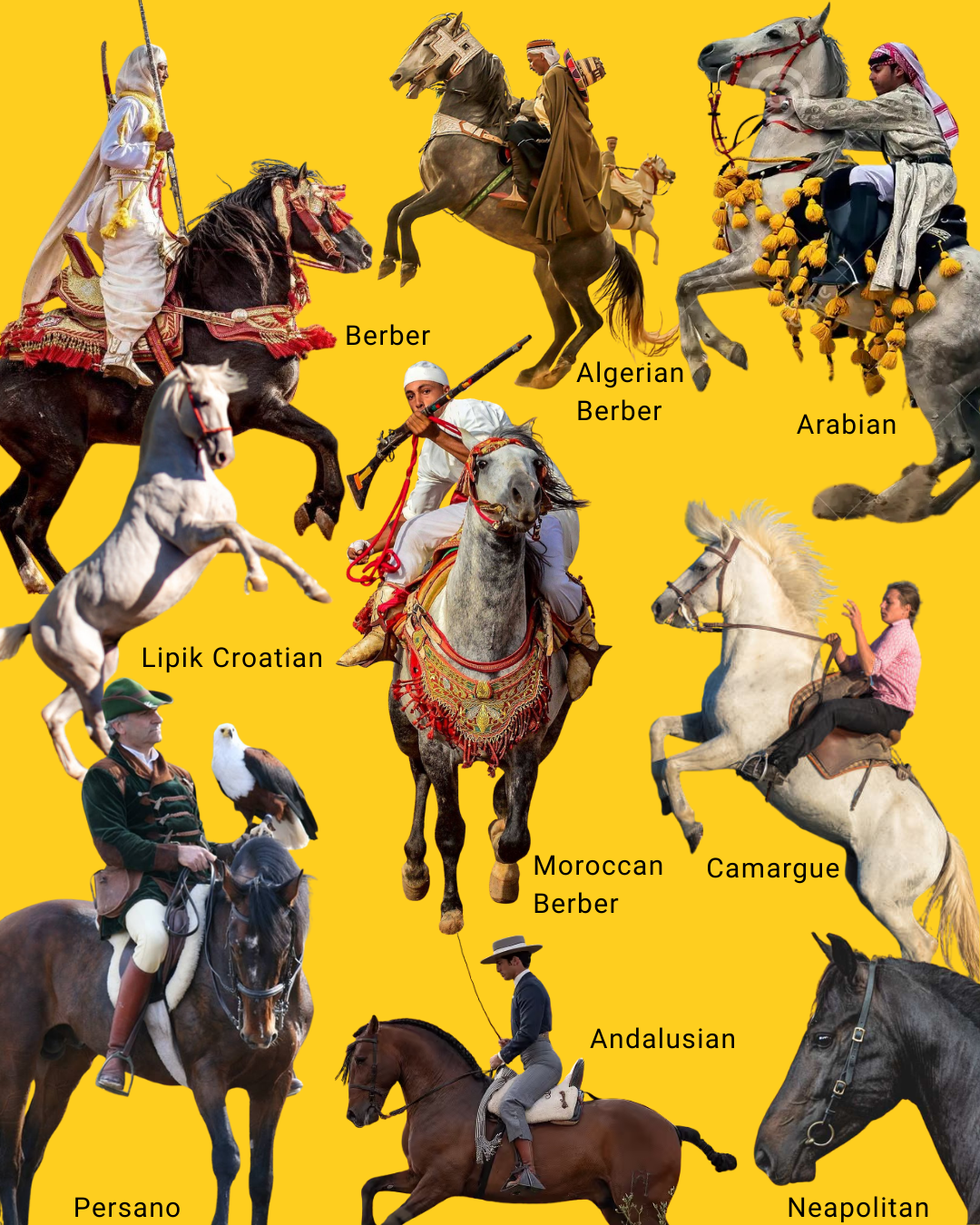
We look specifically to the horses of the Mediterranean, where there is ongoing local culture celebrating the horse in strong specific traditions. We consider the different breedings of horses for different terrains. We rejoice in the variety and complexity of the equine culture and wish to represent it creatively.
ROMA MITICA calls artists to consider the horse as the supreme example of nature's collaboration with man. We ask also artists to contemplate the horse's role in the creation of empire, colonialism, dominion, and domination - to caution against man's urge to coerce and control his fellow man. We ask artists to consider the unicorn, symbol of the Incarnation and feature of courtly love, and other depictions of the horses persistent link to the divine and the East, where horses were first domesticated.
Direct representation of the horse is welcome but not obligatory. Submissions may also adopt contemporary, political, ecological, allegorical, or speculative frameworks that resonate with its layered histories and symbolic charge.
Selected artists will be published in the edited volume and will receive a complimentary copy of the first edition.
Read the Open Call guidelines below carefully.
Eligibility
Open to artists of all nationalities and backgrounds.
Emerging and established artists are welcome.
Both individual artists and collectives may apply.
Conceptual Focus
Submissions should engage with one or more of the following themes:
The nature and beauty of the horse
The horse as collaborator with mankind within the natural world
The horse as instrument of empire, war, and dominion
Mythic, sacred, or symbolic representations of the equine figure
Heroes, heroines, warlords and generals trusted steeds
The horse as power disruptor and metaphor of power and domination of technological progress that is ambivalent viz: Artificial Intelligence
Mediterranean culture of the horse, festivals, races, jousts and palio
Mediterranean breeds of horse
Direct representation of the Mediterranean horse is welcome but not required.
Contemporary, critical, ecological, political, or speculative approaches are encouraged but not required.
Accepted Media
Artists may submit works in any of the following mediums, including but not limited to:
Painting
Drawing
Printmaking
Photography
Sculpture
Installation
Textile or mixed media
Digital art
Stills of video art (video submissions may be made also for the category of short-film (TBA)
Archival, research-based, or conceptual practices
Time-based or performance works may be considered only if they can be effectively represented through still images and text in a book format.
Submission Requirements
Applicants must submit:
Artwork documentation
We recommed submitting high-resolution images
Short Artist statement
Describing the conceptual relationship to the project
Short Artist biography
Technical details
Title, year, medium, dimensions, and image credit information
Receipt of donation a to Fondazione Stanta Francesca Romana.
The recommended amount of donation is 20€. If you are in need of financial assistance in making the donation, please contact us via email and we will advice you further.
The donations of this Open Call support the Foundation of Santa Francesca Romana, a home caring for the elderly founded in 1420 by the Doria Pamphilj family in Rome's Trastevere. ROMA MITICA is proud to support this important work in favour of the dignity of old age and the natural end of life.
Selection Process
Submissions will be reviewed by the editors and curatorial team.
Selection will be based on conceptual relevance, artistic quality, and diversity of perspectives.
Selected artists will be notified by email.
Artist Compensation
Each selected artist will receive one complimentary copy of the published book in which their work appears.
The project does not include an artist fee or production budget.
Artists retain full copyright to their works and grant non-exclusive rights for reproduction in the publication and related promotional materials.
Publication
Selected works will be reproduced in the book alongside curatorial and scholarly texts.
Image credits and short artist biographies will be included.

Make the Donation
n order to participate to this Open Call, please donate towards the work of the Foundation of Santa Francesca Romana, a home caring for the elderly founded in 1420 by the Doria Pamphilj family in Rome's Trastevere. ROMA MITICA is proud to support this important work in favour of the dignity of old age and the natural end of life.
The recommended amount of donation is 20€. If you are in need of financial assistance in making the donation, please contact us via email and we will advice you further.